
The Centre's fiscal deficit at the end of the first seven months of financial year 2024-25 touched 46.5 per cent of the full-year target, government data showed on Friday. In absolute terms, the fiscal deficit -- the gap between government's expenditure and revenue -- was at Rs 7,50,824 crore during April-October period, according to data released by the Controller General of Accounts (CGA). The deficit stood at 45 per cent of the Budget Estimates (BE) in the corresponding period of 2023-24.

Despite gross domestic product (GDP) growth being lower-than-expected for the July-September quarter, the six-member Monetary Policy Committee (MPC) may not cut the policy repo rate in the review meeting scheduled for next week due to high inflation in October, according to experts. "Consumer Price Index (CPI) inflation breaching the upper limit of the RBI's tolerance band in October (6.2 per cent year-on-year) is not a favourable backdrop for the MPC to commence the easing cycle, even as the growth outcome disappointed the MPC's expectations," said Shreya Sodhani, regional economist at Barclays, who expects the policy repo rate to be kept unchanged in the December meeting.

Credit rating agency ICRA expects interest rates in the Indian economy to harden, which together with a slowdown in agriculture growth, will put pressure on industrial activity and profitability of the banking sector.

Weak consumer sentiment across urban and rural markets due to slow farm inflows, subdued agri-commodity prices, rising cost of ownership as a result of regulatory changes including safety, emissions, vehicle registration, along with a rise in interest cost/EMI, have impacted demand.

However, copious oil supplies amid growing global output and slowing Chinese oil consumption will put India in a better bargaining position with Gulf suppliers.

Prices of various car models -- ranging from entry-level hatchbacks to high-end luxury offerings -- are set to rise as automakers have announced price hikes with effect from January. Carmakers cite an increase in input costs and operational expenses as the main reason to implement price increases from the next month. Industry experts, however, note that the exercise is also undertaken by automakers every year in December to shore up sales volume in the last month of the year, as customers postpone buyouts to later months to get the new year manufactured units.
Rating agency Icra has revised down its GDP growth estimate to 5.7 per cent, citing absence of concrete improvements in the investment sentiment, weaker monsoon and a likely rise in inflation, which limit RBI's room to spur the growth by cutting rates.
Credit rating agency ICRA is unlikely to revise its rating for ICICI Bank, but said it has 'taken note of the recent pressure' on the bank following panic withdrawal by depositors in some parts of Gujarat and Mumbai.

Wholesale inflation fell to a 3-month low of 2.04 per cent in July on decline in prices of food items especially vegetables, government data released on Wednesday showed. The decline in wholesale price index (WPI) based inflation in July came after it rose for four months in a row till June, when it was 3.36 per cent. It was (-) 1.23 per cent in July last year. In April wholesale inflation stood at 1.19 per cent.

Maruti Suzuki, Tata Motors, Mahindra & Mahindra, Hyundai and MG Motors are gearing up to introduce EVs in India.

'In addition, we have geopolitics and politics and all the other things that will affect commodity prices.'
Global rating agency Moody's Investors Services plans to partially outsource certain services including monitoring of mutual funds of Europe and emerging economies, from Indian rating agency ICRA.

Equity mutual funds witnessed an inflow of Rs 35,943 crore in November, marking a drop of 14 per cent on a month-on-month basis, amid heightened volatility in stock markets driven by various macroeconomic factors, geopolitical events and US election results. Despite this, it marked the 45th consecutive month of net inflows into equity-oriented funds, reflecting the growing popularity of mutual funds among investors, according to data from the Association of Mutual Funds in India (AMFI) released on Tuesday.

Share prices of Nestle India, Asian Paints, Bandhan Bank, Tata Technologies, AU Small Finance Bank and Avenue Supermarts, all a part of the BSE 500 index, have hit their respective 52-week lows on the BSE in Thursday's intra-day trade after a sharp correction in the equity markets.

India's economic growth slowed to near two-year low of 5.4 per cent in the July-September quarter of this fiscal due to poor performance of manufacturing and mining sectors, but the country continued to remain the fastest-growing large economy, data showed on Friday. The gross domestic product (GDP) had expanded by 8.1 per cent in the July-September quarter of 2023-24 fiscal. The previous low level of GDP growth at 4.3 per cent was recorded in the third quarter (October-December 2022) of financial year 2022-23.

Soaring vegetable prices pushed the retail inflation rate to a nine-month high of 5.49 pr cent in September, according to government data released on Monday. The consumer price index (CPI)-based retail inflation rate was 3.65 per cent in August and 5.02 per in September 2023. The previous high inflation rate was witnessed in December 2023 at 5.69 per cent.
Indicating good corporate profile and continuing phases of recovery, credit rating agency ICRA on Tuesday said there were substantial decline in downgrades and robust increase in upgrades, notably in the automobile sector during 2003.

In three separate but similarly-worded orders, Sebi said the default by IL&FS occurred due to "lethargic indifference and needless procrastination and laxity" of the rating agencies.

The government has slashed by up to a fifth the supplies of cheaper gas to city gas entities that retail CNG to automobiles, increasing their dependence in costly imported fuel. Buying costly imported gas to make up for the shortfall should result in a hike in CNG price but given the ensuing assembly elections in Maharashtra, that may be put off for now. Indraprastha Gas Ltd and Mahanagar Gas Ltd in regulatory filings stated that supplies of domestically produced gas, which was available at a capped rate which is half of the imported price, has been cut.
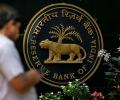
The Reserve Bank of India (RBI) has sought granular data from select non-banking financial companies (NBFCs) on their loan book growth. The details sought are on the outstanding product-wise portfolio and the annualised interest charged on them. The annualised interest slabs mentioned are as follows: less than 10 per cent, 10-20 per cent, 20-30 per cent, 30-40 per cent, 40-50 per cent, and above 50 per cent.
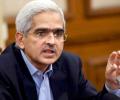
The December meeting of the Reserve Bank of India's (RBI's) six-member Monetary Policy Committee (MPC) will start on Wednesday even as there is no clarity on whether Governor Shaktikanta Das, the chair of the panel, will continue in office after his term ends next week. The outcome of the meeting will be announced on Friday by Das at 10 in the morning.

The growth in production of eight key infrastructure sectors slowed down to a 20-month low of 4 per cent in June this year due to a decline in the output of crude oil and refinery products, according to official data released on Wednesday. The core sectors' production grew by 6.4 per cent in May 2024. The growth of core sectors -- coal, crude oil, natural gas, refinery products, fertiliser, steel, cement and electricity -- was 8.4 per cent in June 2023.

Tata Power's Q2FY25 reported results were above consensus despite challenges like low plant availability at Mundra and Odisha discom operations affected by rain. A positive development for the power major included module manufacturing hitting nearly 100 per cent capacity utilisation. The Board has approved an investment proposal for a 1GW pumped storage project (PSP).

After a strong show during the September quarter (Q2FY25) and favourable demand conditions, going ahead, the country's largest player in the room air conditioner segment, Voltas is well placed to improve its market share. Expectations of record volumes in FY25 for the sector and the company's strategy of prioritising market share over margins could help the leader expand share in the room AC segment.

The company has finalised a three year business plan to increase revenue and control costs.

Gold, a safe-haven bet, is likely to continue its record-smashing journey in the New Year, rising to Rs 85,000 per 10 grams and even Rs 90,000 level in domestic markets if geopolitical tensions and global economic uncertainties continue.

Retail inflation in August inched up to 3.65 per cent, though vegetables and pulses witnessed price rise in double digits, according to official data released on Thursday. The retail inflation based on the Consumer Price Index (CPI), however, remained below the Reserve Bank's median target of 4 per cent for the second month in a row. It was at a five-year low of 3.6 per cent in July.

Says operating environment for Indian corporate sector has improved during FY15

Anaysts recommend a 'buy' on Icra due to its positive outlook.
Anaysts recommend a 'buy' on Icra due to its positive outlook.
Credit rating agency ICRA on Tuesday lowered economic growth projection for the Indian economy to 6.3 per cent this fiscal from its earlier forecast of 6.5-6.7 per cent due to an expected fall in farm output. \n

'There is no immediate threat to the government, and they would prefer the growth agenda.'
Interest on home loans is likely to remain low and the share of banks in the overall mortgage market is set to rise in the medium term.
The economy is slated to grow by 6.3 per cent over the financial year 2004-05 and accelerate to 6.8 per cent in the next fiscal, credit rating agency ICRA said on Tuesday.
Making a foray into Kuwait, ICRA said it was in talks with other Arab nations for extending the technical expertise and was open to picking up stakes in rating agencies in countries which allowed foreign participation.

The small finance bank model may still be testing the water some 10 years since its launch. According to banking experts, the regulator has taken a cautious approach in granting approvals. Unity Small Finance Bank was the last one to get a licence in the category in November 2021.
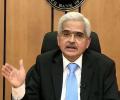
The Reserve Bank of India on Wednesday decided to keep the policy rate unchanged for the tenth time in a row but changed its stance to 'neutral' that may lead to a cut in the forthcoming policies. RBI maintained status quo despite the US Federal Reserve lowering the benchmark rates by 50 basis points last month.
Rating agency ICRA has warned economic growth may dip to 6.4 per cent during 2004-05, hinting that the "feel-good factor" would be temporary and over 8 per cent growth unsustainable.
